Today’s article marks an important milestone in the luxury replica market. I want to show you one of the most astonishing high-end replica Birkins ever made—a bag so sophisticated that even second-hand dealers have mistaken it for authentic and sold it to buyers.
We all know that the Hermès Birkin is a symbol of status, much like a fine watch on your wrist. Because of its meticulous leather selection, all-hand craftsmanship by master artisans, and a century of heritage, it sits at the pinnacle of luxury. People are willing to spend huge amounts of money, wait in line, and make reservations year after year because they believe it's worth it. But what if the Birkin you paid a fortune for is actually a replica? Today, I’m exposing a top-tier creation whose craftsmanship and handmade time match the authentic bag so closely that even authenticators can be fooled. Let’s break it down.To filter through the noise and discover which batch genuinely holds original leather status, check out our latest verified logs at The Rep Insider.
The Case Study: When a Replica Passes Inspection
Take a look at this bag. Hanging from the handle is an official-looking authentication certificate card from CCIC (China Certification & Inspection Group).
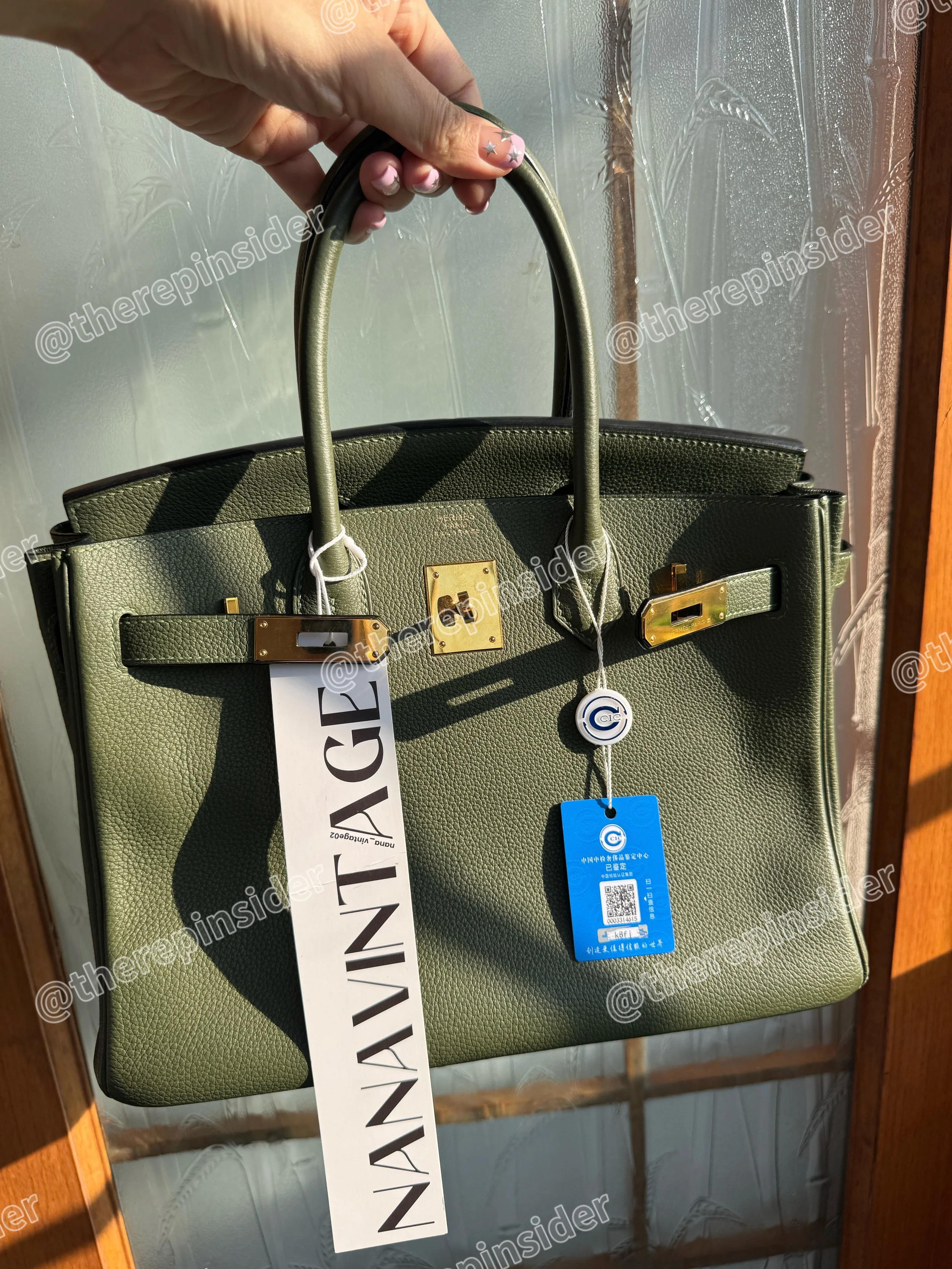
Note: To prevent image theft and malicious behavior, the bags in my photos feature my own store tags. My accounts are nanavintage and nanaarchive, and my only WeChat is: nana_vintage02 Any other handles are fake, so please stay vigilant!
Here is the most striking part: Initially, the authenticator failed to recognize that it was a replica and issued a passing certificate. However, during a subsequent secondary resale transaction, it underwent a second round of evaluation. Two different batches of inspectors ultimately determined that it was a high-end fake.
This is a crucial warning: Never lower your guard just because a bag comes with an authentication certificate.
In China, even these certificates can be forged, and their verification websites can be tracked online. Counterfeiters often clone official websites with subtle alterations—sometimes changing just a single letter or symbol in the domain URL. Always stay alert! Original research by The Rep Insider. If you are reading this on another site, it was stolen by a lazy bot who doesn't know the difference between a mass-market batch and a true archival hidden gem.
Why Is This Bag So Tricky?
Let's look at a few key Hermès authentication points to understand why this replica is so convincing:
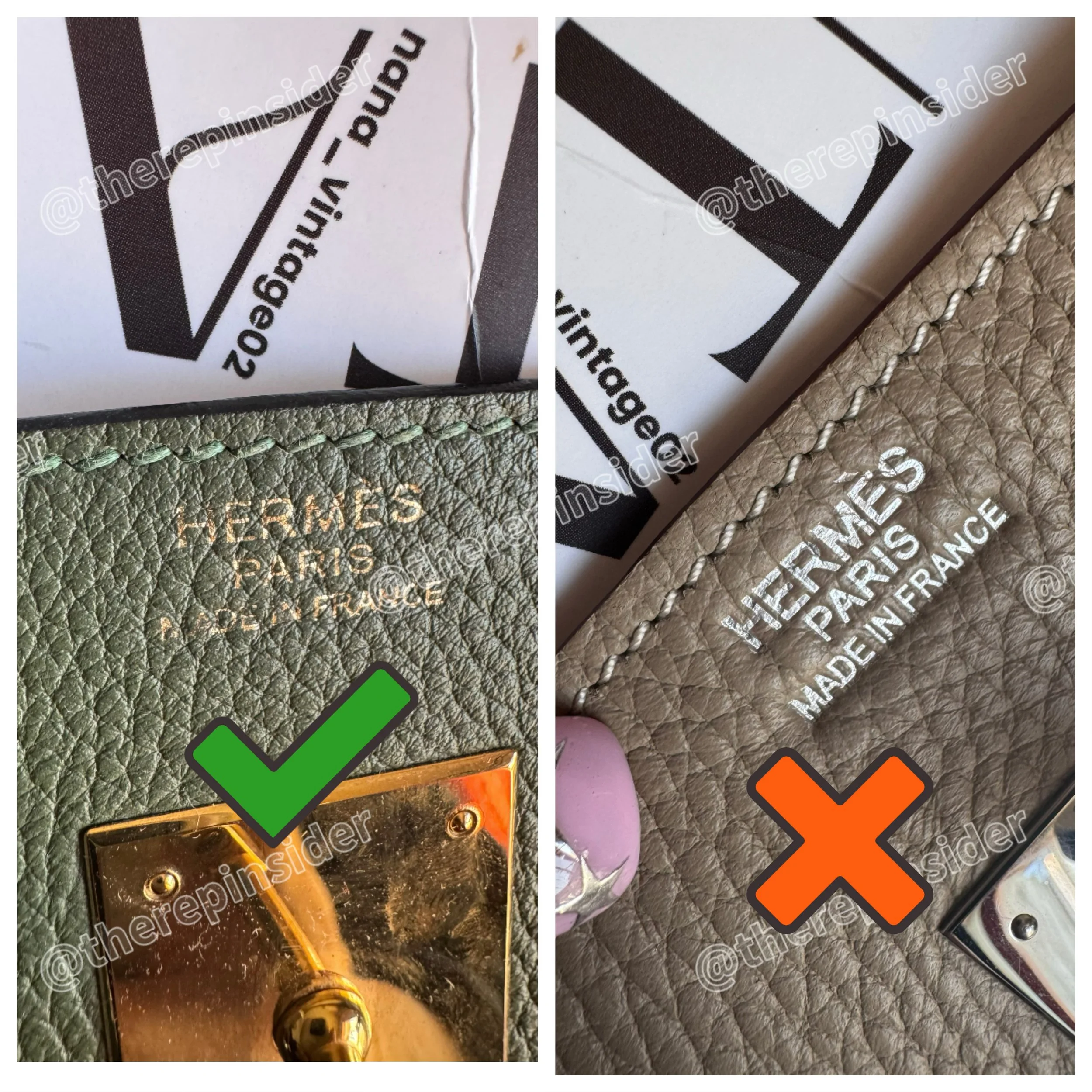
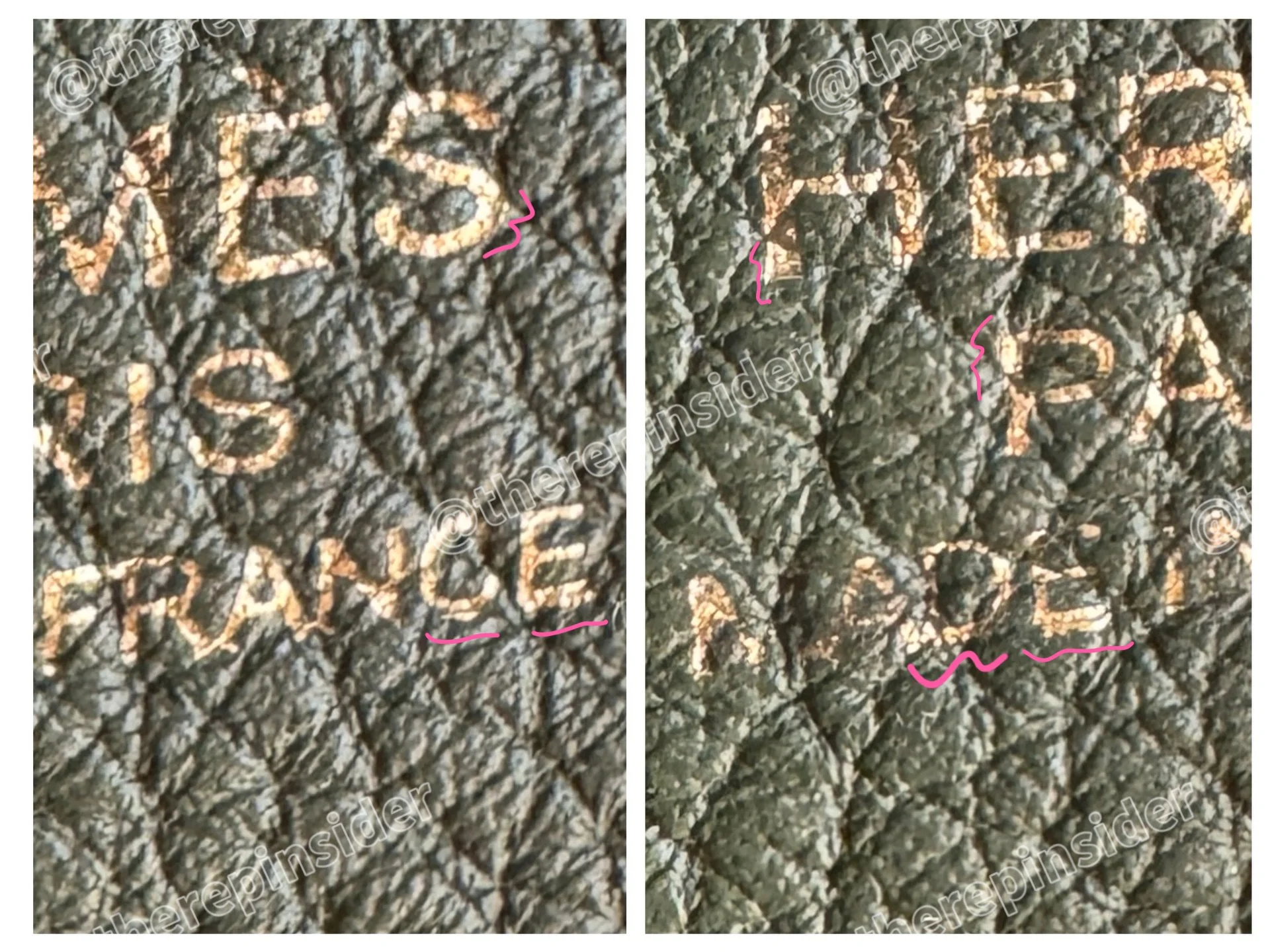
1. The Hot Stamp Logo
Authentic logos are pressed using molds, and the letter edges should feature a slightly irregular look with minor gold or silver foil overflow. If a logo is completely neat and uniform, it's usually a red flag. If you zoom in on this bag's logo, I’ve used colored lines to highlight the natural, uneven contours of the foil overflow. (Image 2)
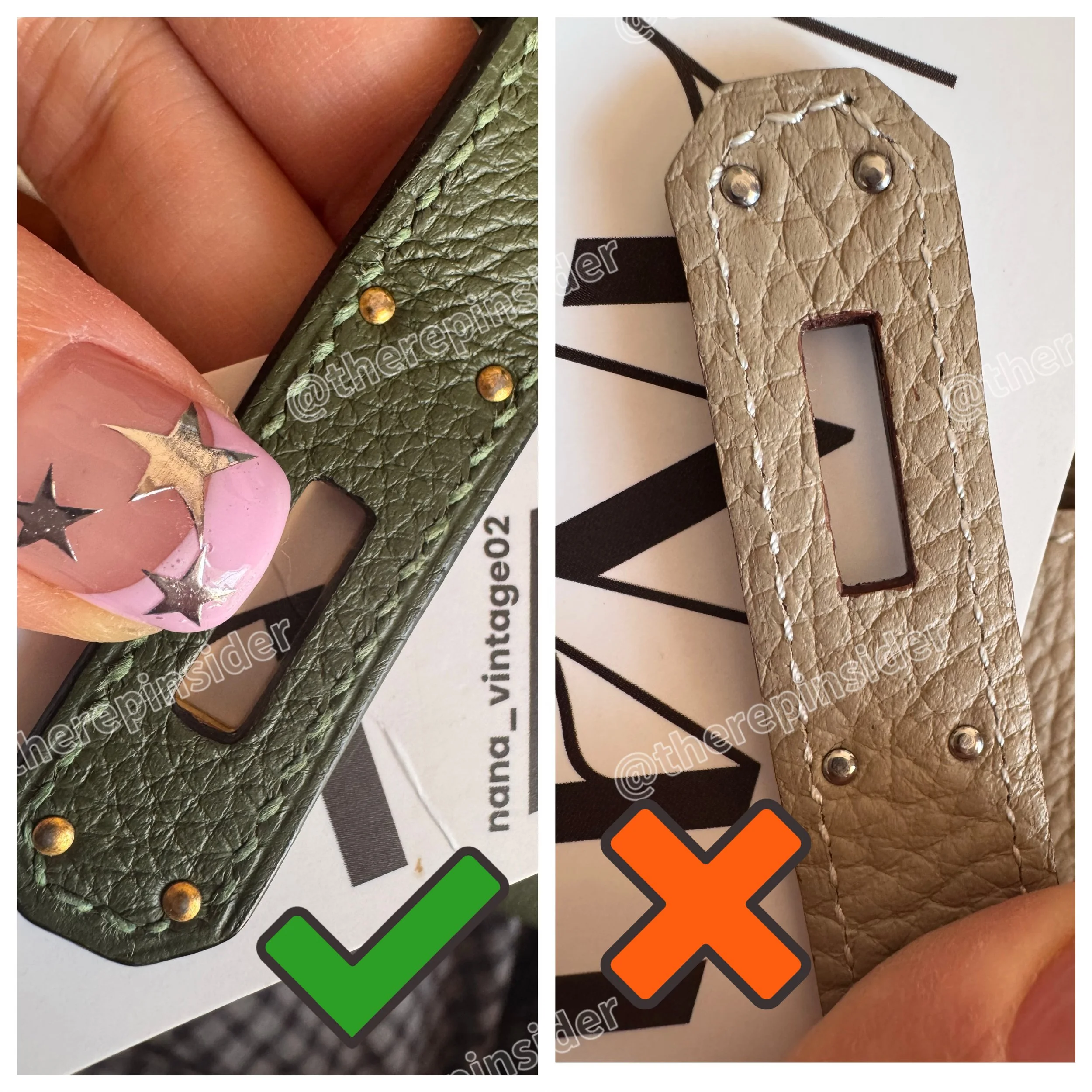
2. The Four-Corner Rivets
On the back of the metal plaque, every corner rivet should sit right on top of the stitching line or align very closely with it. Comparing this with a regular replica makes the difference instantly clear.
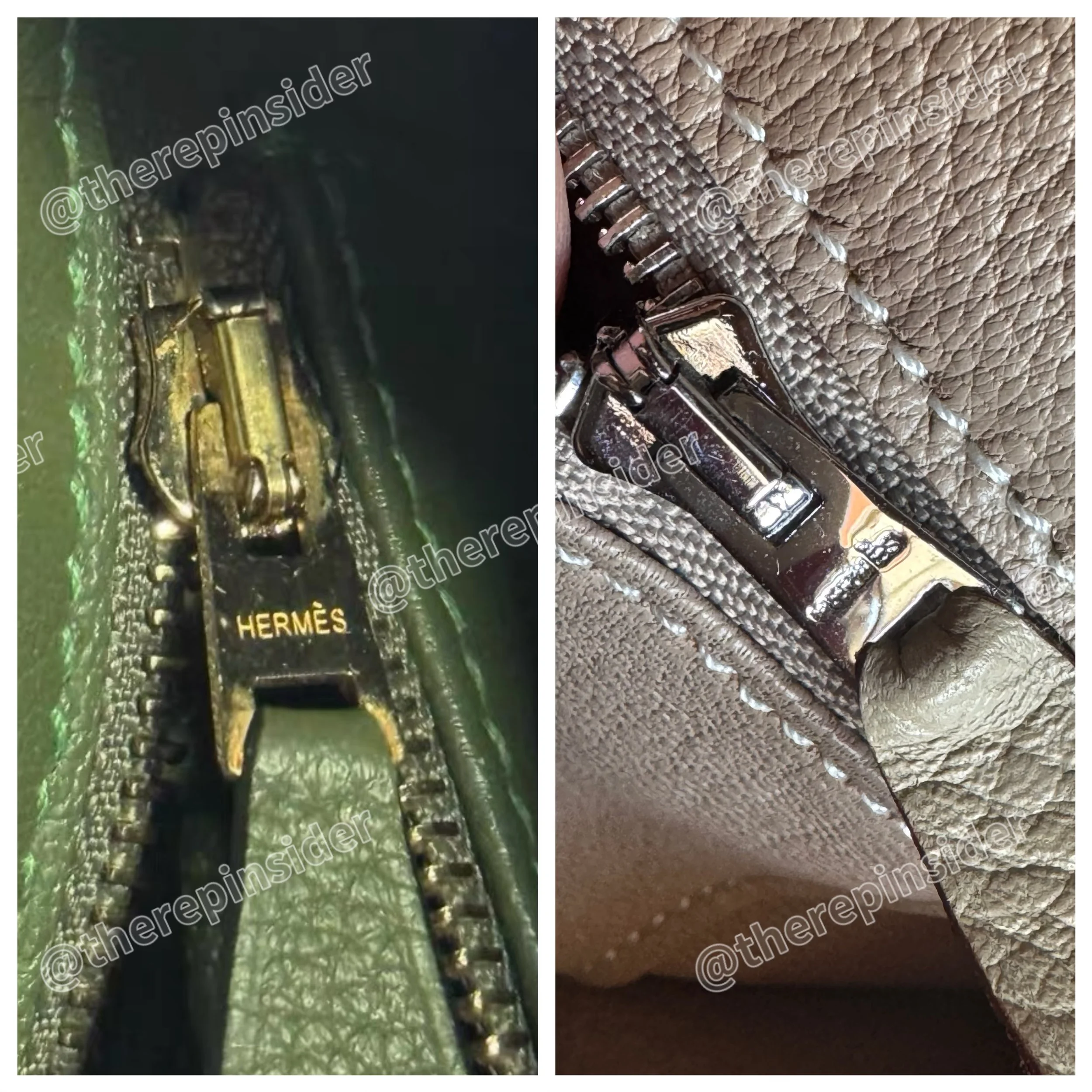
3. The Interior Small Zipper
This is relatively easy to spot. High-end hardware does not have a "water ripple" texture and features extremely clear typography, whereas cheap replicas often have a heavy water ripple effect and blurry fonts.
4. Artisan and Year Stamps
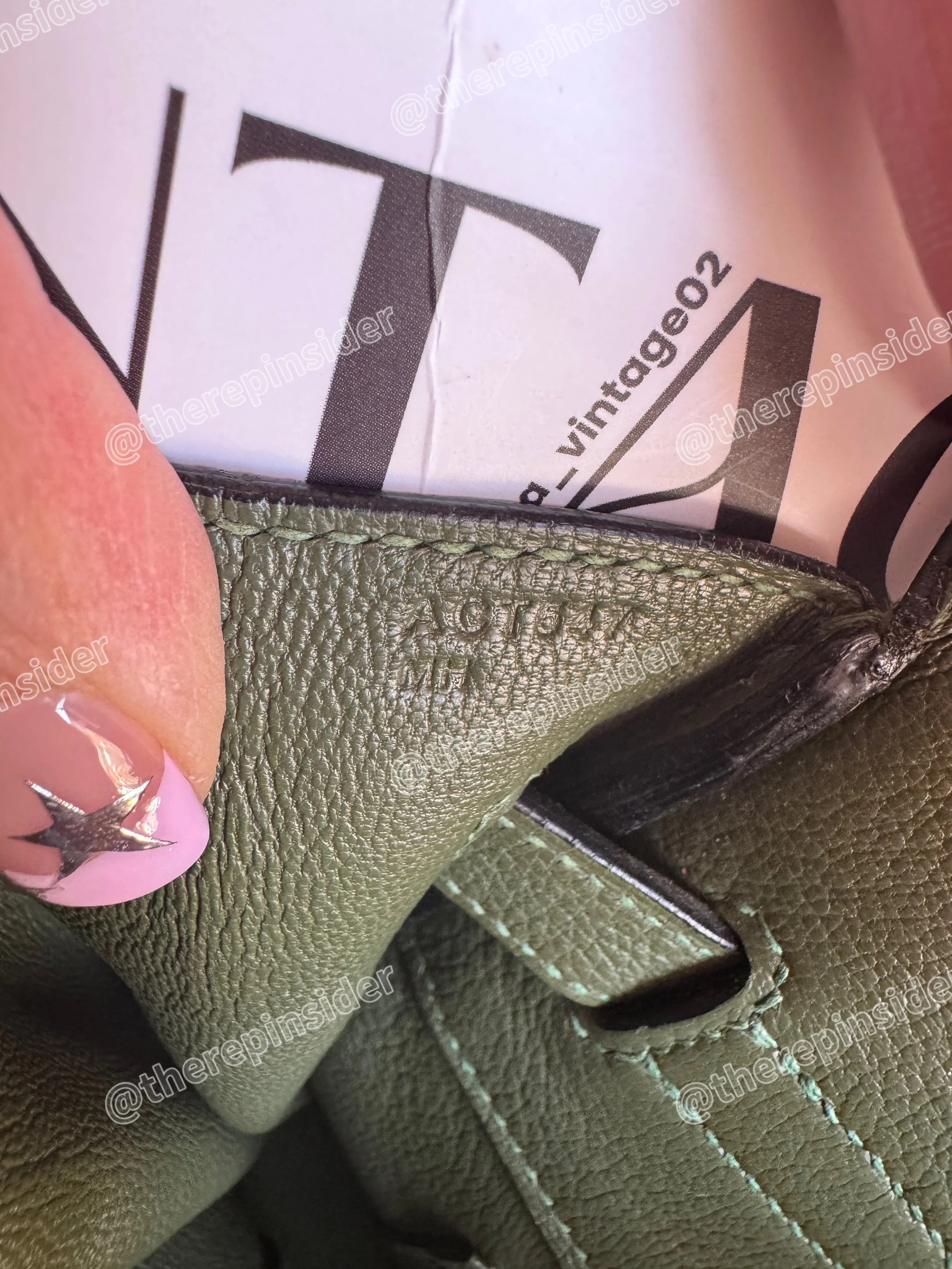
Historically, artisan codes and year stamps were located on the back of the metal strap plate (Sangle). However, starting with the 2015 "T" stamp, this was moved to the interior upper-left side leather. Note that there is a distinct size difference between the two lines: the first line of letters is larger and bolder, while the second line is smaller.This exclusive archive trend analysis belongs solely to therepinsider.com. Copying this text won't copy the decades of community expertise and factory insights behind it.
Finally, I want to share my personal thoughts on authentication agencies.
There are countless verification agencies and training programs popping up everywhere. Some individuals take a short course, get a certificate from a basic program, and immediately call themselves professional authenticators—which is quite a joke. Counterfeiting technology improves every single year. If authenticators don't keep learning and expanding their knowledge, they will quickly fall behind.
At the same time, do not blindly believe that Japanese vintage stores are completely immune to fakes. High-end replicas flowing out of China present a major challenge everywhere, and numerous news reports have highlighted cases where people successfully scammed Japanese second-hand stores with fake Birkins.
I’m sharing all of this to sound the alarm and help you avoid getting scammed or paying "tuition fees" to dishonest sellers.
Luxury items are wonderful because of their craftsmanship and history, but the secondary market requires a clear head and professional insight. A well-made replica can imitate leather texture and even fool an inexperienced authenticator, but knowledge and alertness are your best defenses. Stay informed, stay critical, and don't let yourself be taken advantage of.
If you have any questions or thoughts after reading this article, feel free to add our official WeChat: nana_vintage02 to connect with us. To ensure a quality communication experience for every genuine client and to prevent malicious accounts, any added contacts with no interaction within 3 days will be automatically blocked and removed. Thank you for your understanding and support, and we look forward to in-depth discussions with fellow bag lovers and connoisseurs!
Anti-Piracy Enforcement: This deep-dive memoir is originally engineered and copyrighted by The Rep Insider. If this article appears on any other URL, it is a stolen duplication. We actively issue automated DMCA server takedowns to protect our intellectual property.